



HEPA Filter Leakage Testing
HEPA Filter Leakage Testing
High Efficiency Particulate Air (HEPA) filter generally refers to a filter that captures 99.97% or more of particles with a diameter of 0.3 μm or larger. It is typically used as the terminal filtration device in pharmaceutical cleanrooms to provide clean air. Whether a cleanroom can achieve and maintain its designed cleanliness level depends on the performance and installation of its HEPA filters. Therefore, the testing on HEPA filters in cleanrooms to ensure they meet requirements is one of the important means of guaranteeing a clean workshop environment.
1. Purpose of HEPA Filter Leakage Testing
The purpose of leakage Testing is to identify defects in the HEPA filter and in its installation by checking the integrity of the HEPA filter and its connections to the mounting frame, so that appropriate remedial measures can be taken to ensure the cleanliness of the area.
2. Principle of DOP/PAO Leakage Testing
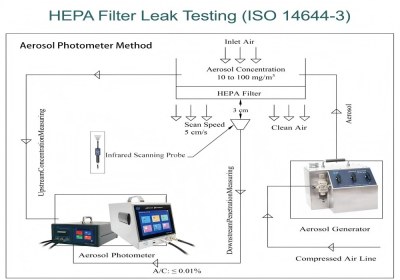
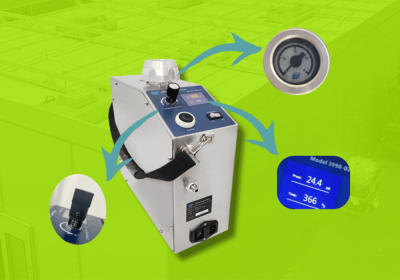
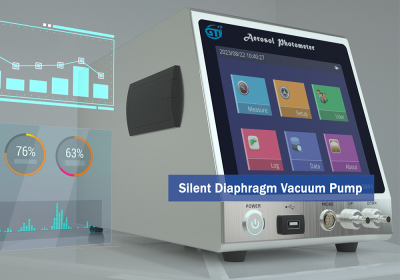
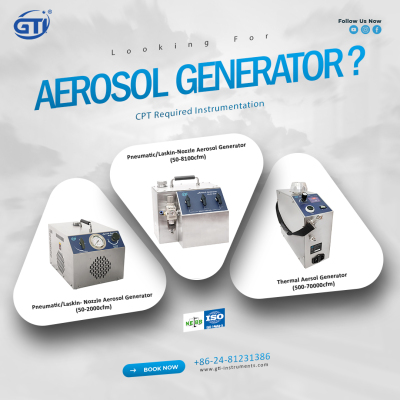
It typically uses an aerosol generator to introduce challenge particles upstream of the HEPA filter, and an aerosol photometer to measure the aerosol concentration upstream and downstream of the filter to determine whether there is a leak. The purpose of generating aerosol is that, since the upstream particle concentration of a HEPA filter is relatively low, it is difficult to detect leaks using only a particle counter without aerosol generation. Supplementing with aerosol generation makes it possible to detect leaks clearly and easily.
3. Testing Method
To verify whether there are obvious leaks in the HEPA filter and its installation, the testing must be carried out at the following locations: the filter media, the joint between filter media and the inner side of the filter frame, between the filter frame gasket and the filter bank support frame, and between the support frame and the wall or ceiling. Materials and instruments include PAO-4 oil, aerosol generator and aerosol photometer.
To achieve uniform aerosol concentration when the aerosol reaches the HEPA filter, the aerosol may be injected directly on the negative pressure side of the system fan. If aerosol is injected through the air duct, the injection point shall be at least 10 times the duct diameter away from the HEPA filter, with minimal bends (per IEST, Institute of Environmental Sciences and Technology). For HEPA filters in laminar flow hoods and clean benches, the aerosol shall be injected directly on the negative pressure side of the system fan.
The operator shall initialize the aerosol photometer and set the 100% and 0% reference values. Complete initialization and set alarm values in accordance with the operating requirements of the aerosol photometer. Connect the upstream sampling tube to the upstream sampling port to measure the upstream aerosol concentration. Adjust the aerosol output per the aerosol generator’s operating instructions to achieve an upstream aerosol concentration of 10~20 μg/L.
4. Scanning Leakage Detection
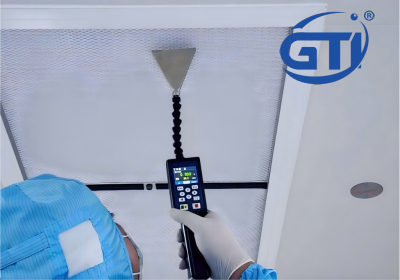
Remove the diffuser plate of the HEPA filter and scan the entire filter face, the area between the filter and the frame, between frame sections, and between the frame and the static pressure box for seal integrity. During scanning, the probe should be approximately 1 inch (about 2.54 cm) from the filter face, and the scanning speed should not exceed 5 cm/s. Scanning should be performed in a back-and-forth linear pattern, with overlapping lines. If an alarm sounds during testing, it indicates a leakage. After the leakage is sealed with silicone or tightened, scanning and inspection should be operated again.
5. Result Determination and Handling
The HEPA filter leakage rate should be less than or equal to 0.01%. If the leakage at all points does not exceed 0.01%, the HEPA filter is judged as qualified. If any point exceeds 0.01%, it is judged as unqualified. Leakage in the HEPA filter media may be repaired with special adhesive, but the area of a single leak must not exceed 1% of the total area, and the total area of all leaks must not exceed 5% of the total area. If these thresholds are breached, the HEPA filter must be replaced.
6. HEPA Filter Leakage Testing Frequency
The FDA recommends that the testing should be performed every six months for aseptic processing workshops. ISO 14644 recommends a maximum interval of 24 months for leak detection. The testing should be performed after HEPA installation or replacement. When the environmental monitoring shows deterioration in air quality, or when a product sterility test fails or a media simulation filling trial fails, the testing may be conducted as a part of a deviation investigation.
Get the latest price? We'll respond as soon as possible(within 12 hours)